

Archived article: Please note that tax, investment, pension and ISA rules can change and the information and any views contained in this article may now be inaccurate.
One of the striking market reactions to the US-Iranian conflict is the sharp reversal in interest rate expectations as investors anticipate the potential inflationary impacts of energy supply disruptions.
UK markets were expecting two interest rate cuts over the next 12 months from the Bank of England in late February, but just three weeks after the start of hostilities that expectation had shifted to hikes adding up to a one percentage point increase.
The Bank of England held rates steady at the policy meeting on 19 March and said it was monitoring the Middle East situation closely, implying it is ready to act if inflation becomes persistent.
A similar repricing of interest rate expectations was seen in Europe and to a lesser extent in the US where implied interest rate cuts expectations were pushed out to 2027.
Despite recent signs of de-escalation by the Trump administration, bond yields remain elevated. For example, yields on two-year UK gilts, which are a useful guide for the trajectory of official interest rates, sit at 4.4%, up from 3.5% at the end of February.
What do higher rates mean for markets?
While central bankers can afford to wait for the dust to settle before acting, markets tend to ‘shoot first and ask questions’ later.
Beyond the predictable rise in oil and gas prices investors immediately lowered their appetite for owning riskier assets like stocks, to reflect greater uncertainties.
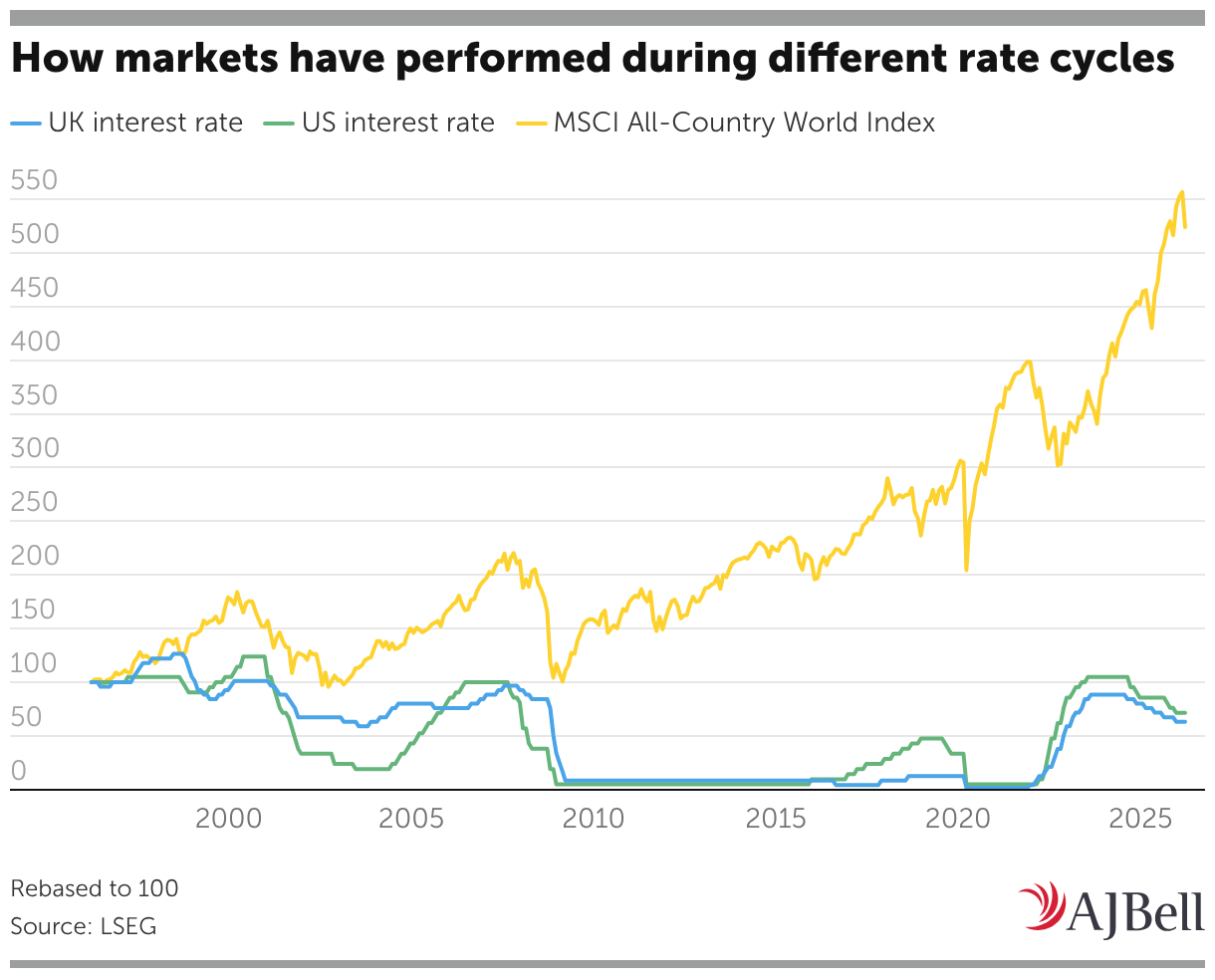
As the chart illustrates, rate hikes by central banks in 2022 to combat rising inflation created a headwind for equities with the MSCI World index dropping by around 18%, before rebounding in 2023.
By contrast, the early 2000s central bank hike in interest rates did not have the same effect on equity markets, which continued to make gains before stumbling during the 2007-2008 financial crisis.
If the current rise in bond yields proves sustainable, it should in theory lower the value of corporate profits via lower price to earnings ratios. When volatility spikes, in might ordinarily prompt a move into lower risk assets like bonds.
However, just like the period coming out of the pandemic in 2022, the prospect of rising inflation reduces the attractiveness of owning bonds, whose value is very sensitive to inflation.
It is worth remembering the harsh realities of the post-Covid period when inflationary pressures saw bonds underperform equities in 2022.
At the same time, other potential havens like gold and silver have not protected portfolios this time around, in part due to the strong price run up prior to the Middle East conflict.
The strength of the US dollar has also had a negative impact because precious metals become more expensive to non-US buyers.
What's happened today and during historic periods of rising interest rates?
The bar charts show the performance of the FTSE 350 sectors in recent weeks and during previous periods when interest rates went up, although it is worth noting the 2003-2005 period was not accompanied by rising inflation. That period, in the run up to the financial crisis, also coincided with a period of rising stock markets.
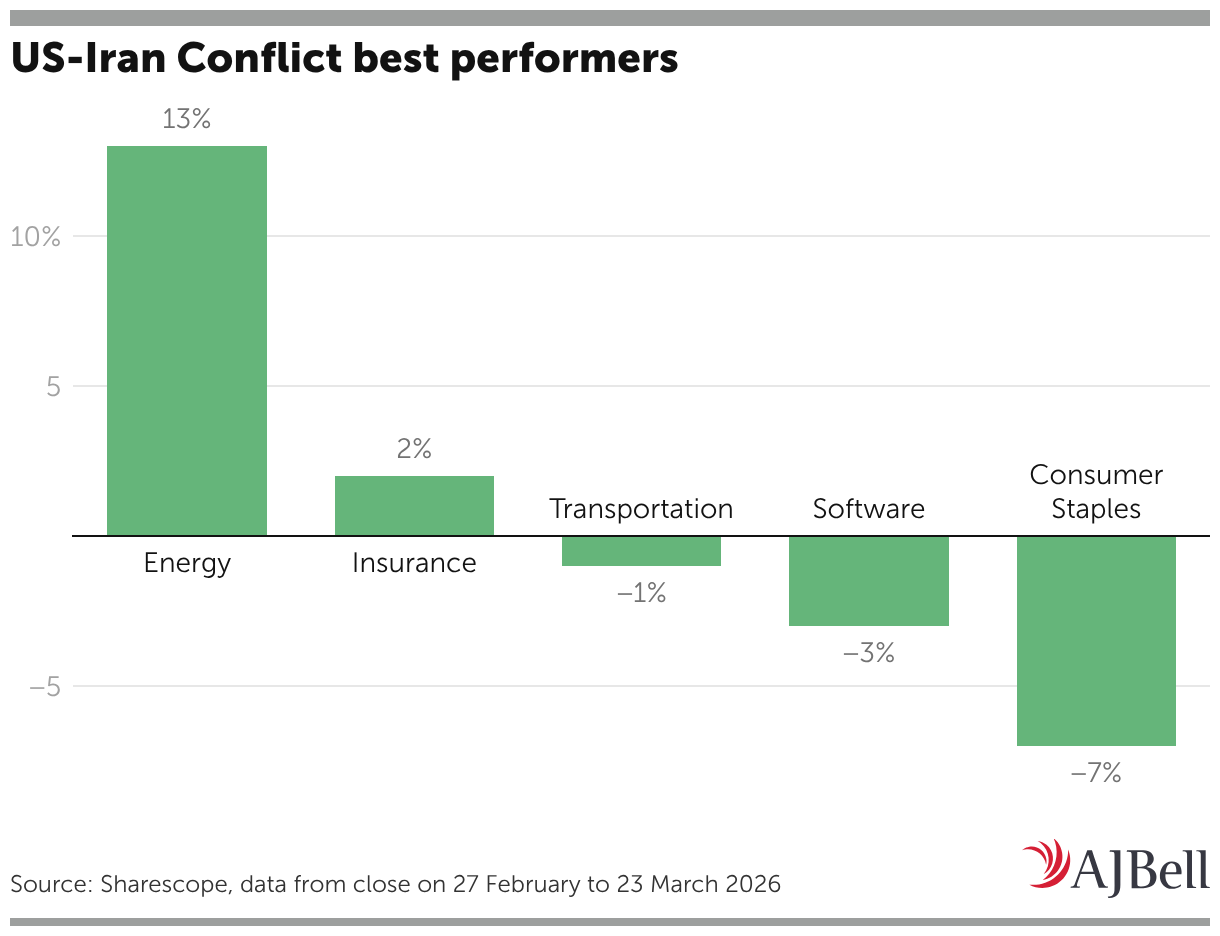
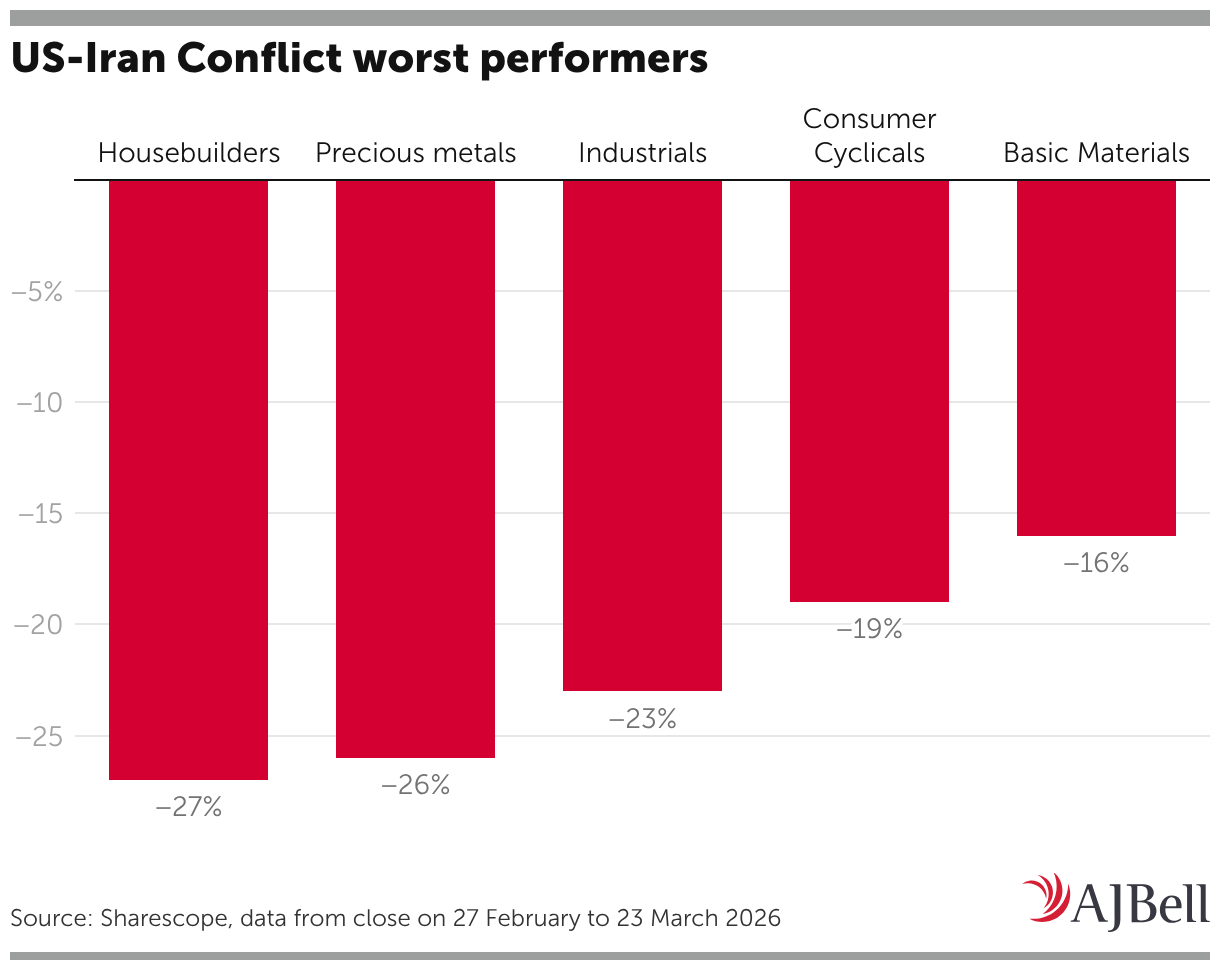
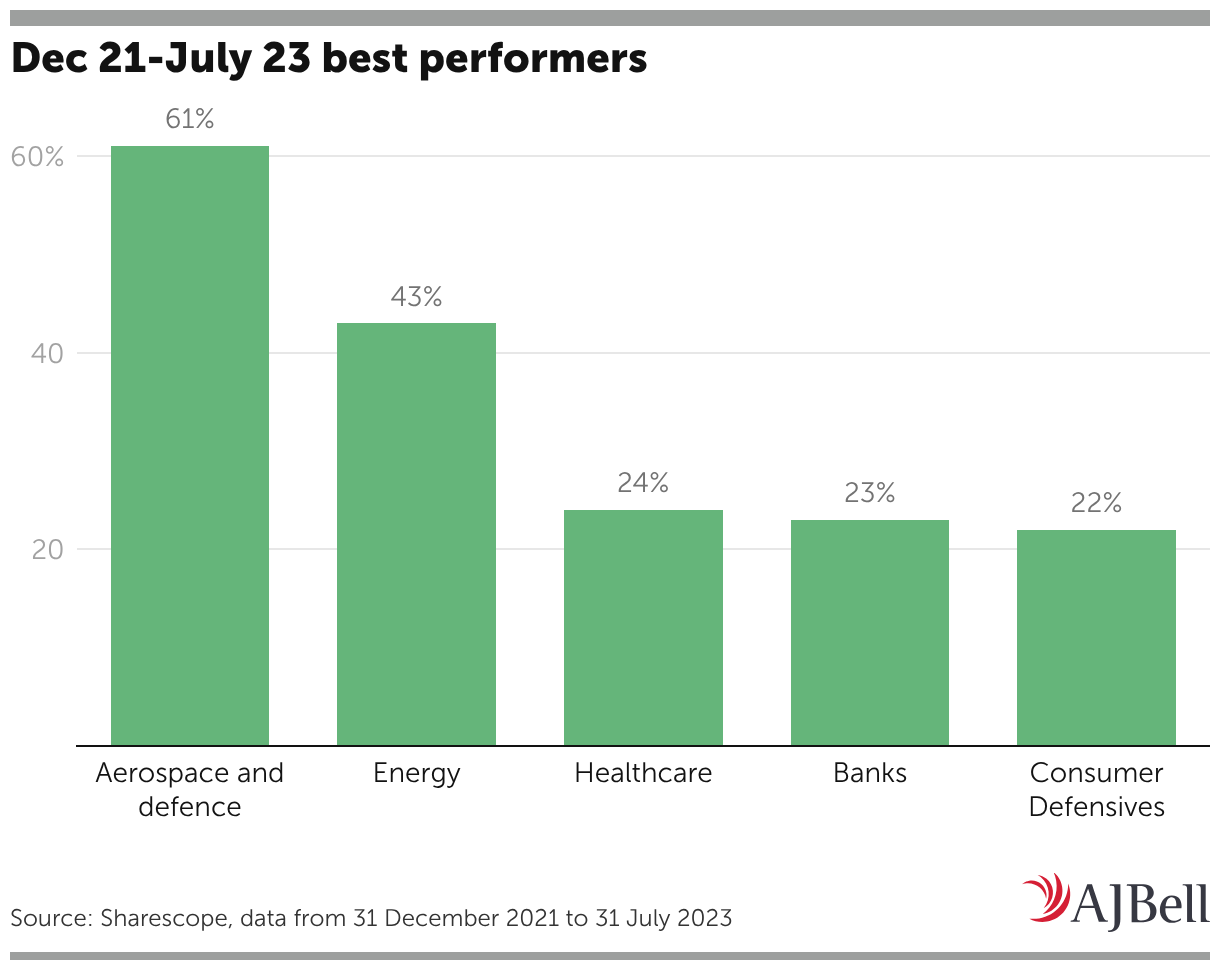
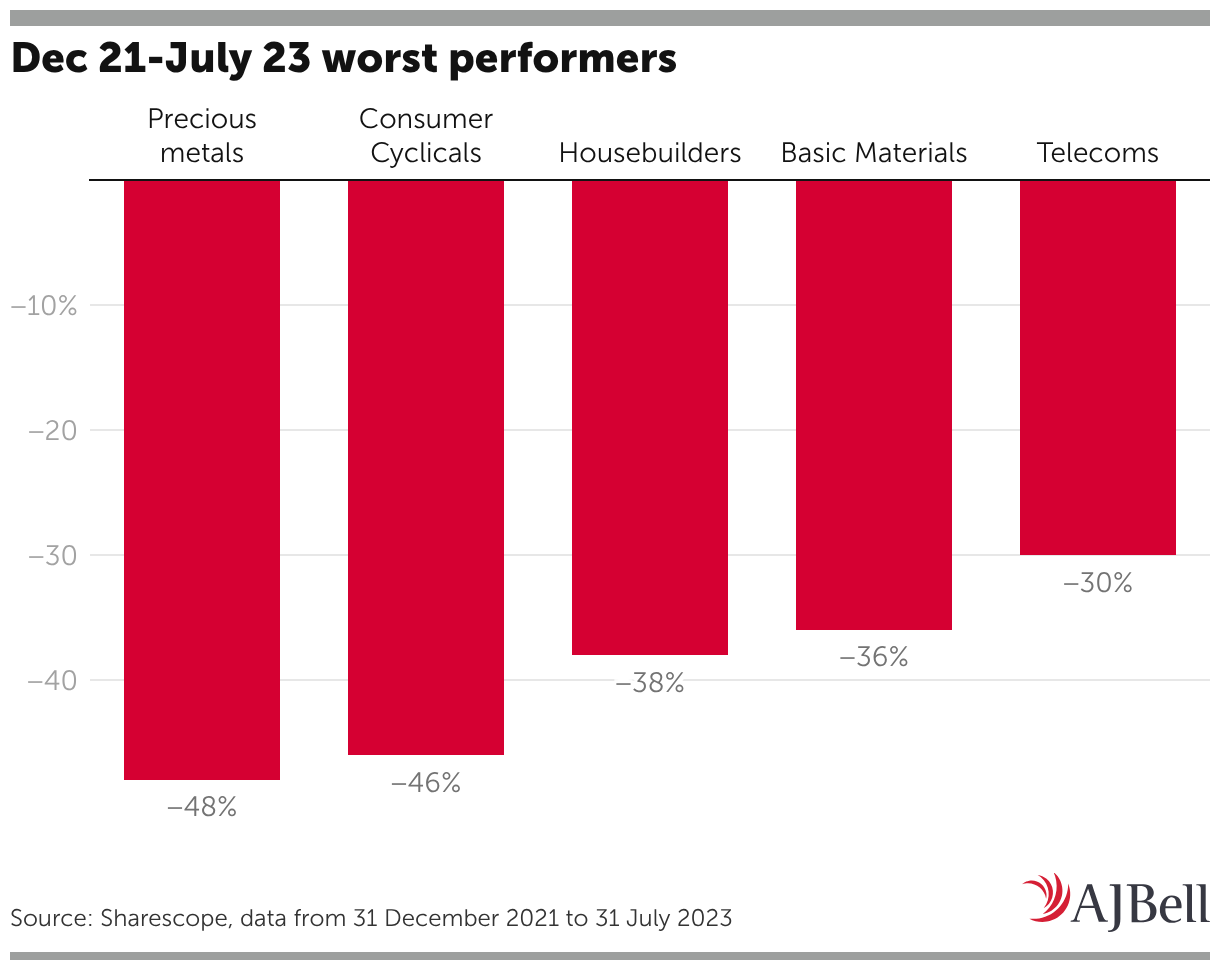
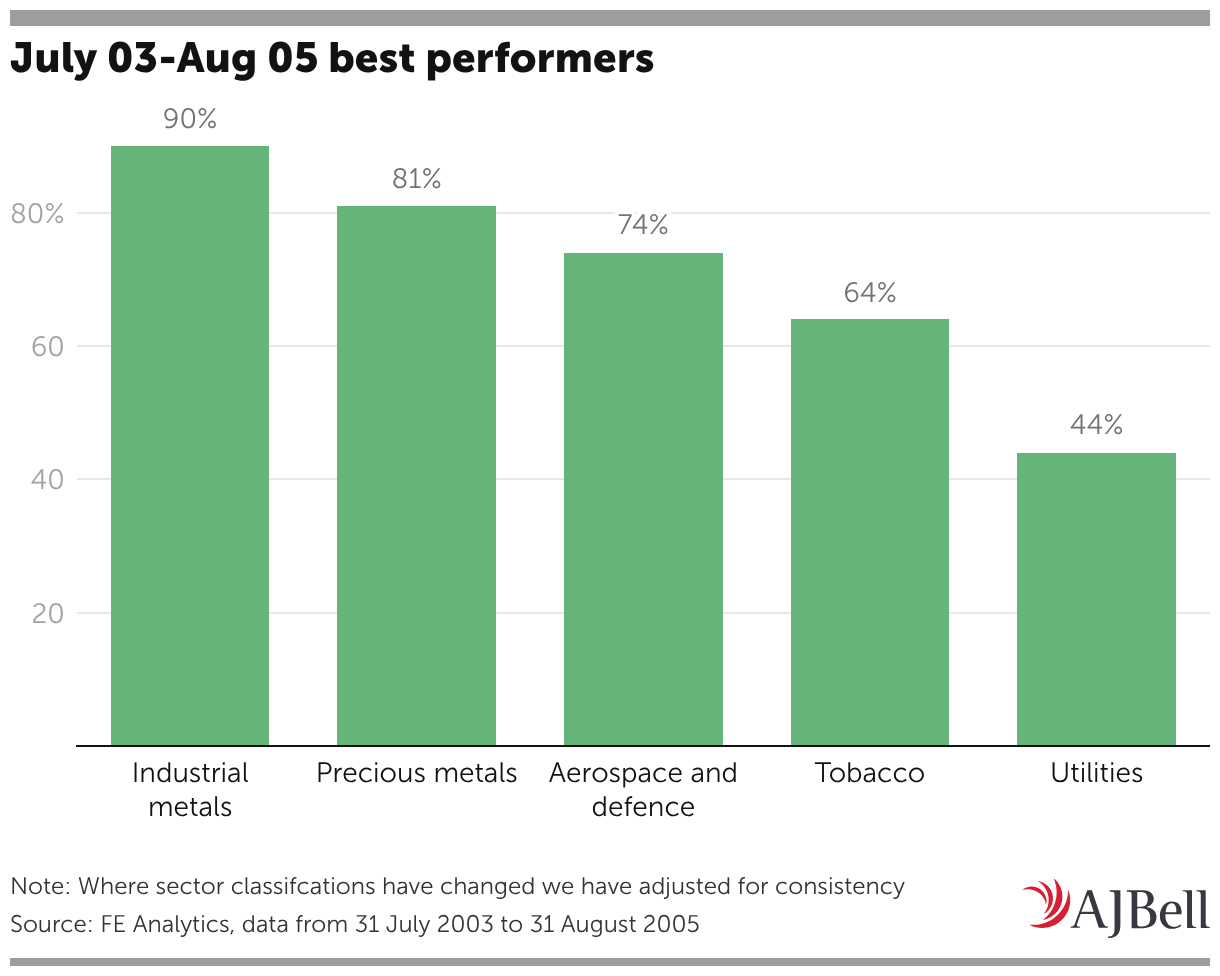
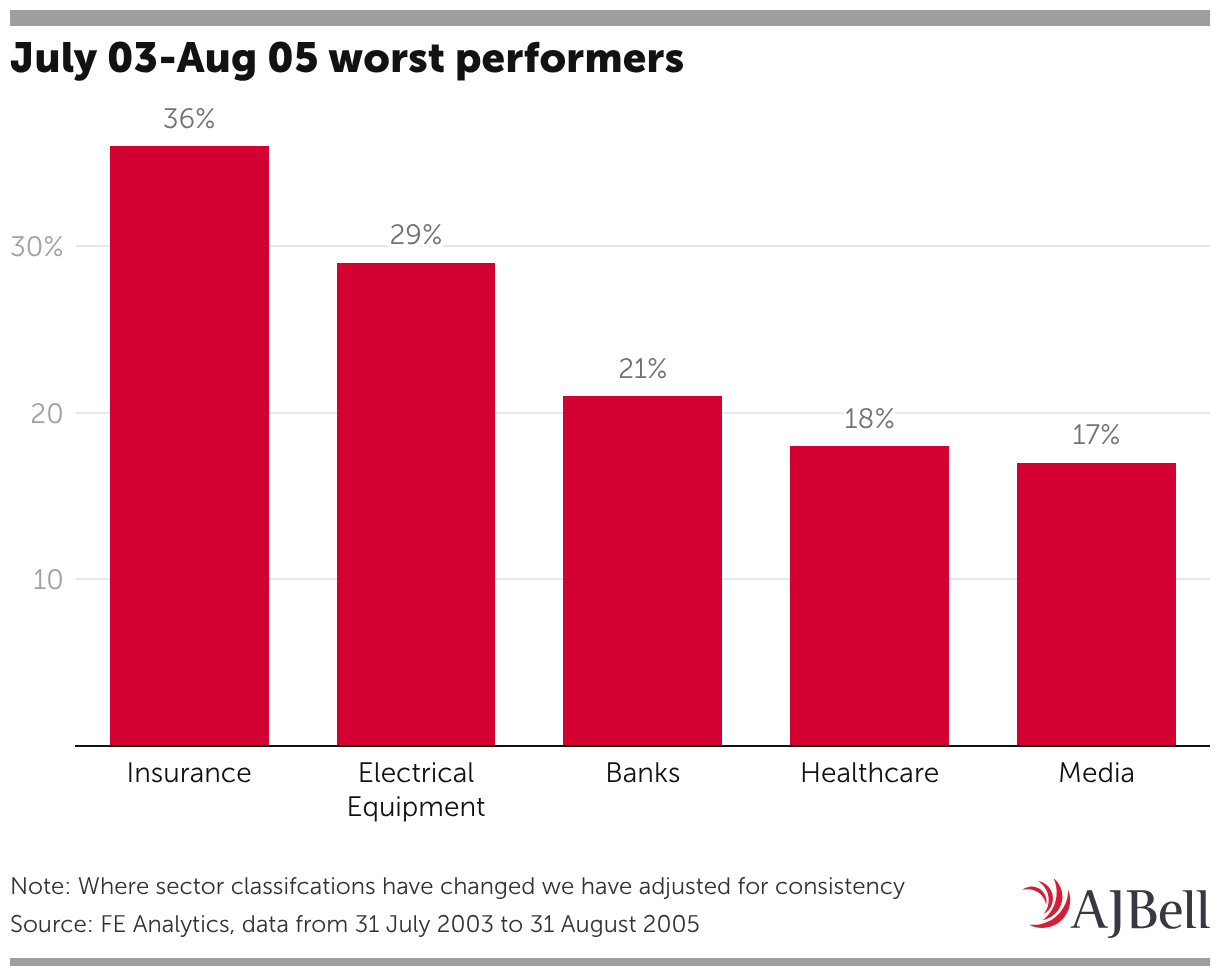
The data shows that economically sensitive sectors like housebuilders saw the brunt of the losses, while defensive sectors like healthcare provided some protection.
Unsurprisingly, energy and aerospace sectors outperformed during the current and post pandemic periods reflecting rising geopolitical tensions and supply shortages.
What was different in the 2003-2005 period?
The mid-noughties period saw central banks looking to normalise interest rates in a multi-year tightening cycle following aggressive cuts post the dotcom boom and subsequent bust.
Increasing demand for industrial metals like copper and zinc reflected booming demand from China in the early wave of the 2000s commodities boom.
In an echo of current geopolitical events the strength of aerospace and defence stocks between 2003 and 2005 reflected the escalation of US and UK-led military operations in Afghanistan (from 2001) and Iraq from 2002, with associated rises in defence spending.
Tobacco and utilities outperformed as investors sought solid defensive cash flows instead of ‘story stocks’ associated with the fading dotcom era.

Martin Gamble: Shares and Markets Writer
Martin Gamble is Shares and Markets writer at AJ Bell. He was previously the Education Editor of Shares Magazine. He has been with the business since 2019.
Martin graduated from the University of Kent in...