

Archived article: Please note that tax, investment, pension and ISA rules can change and the information and any views contained in this article may now be inaccurate.
If you’ve already invested in a fund or you’re looking at funds to invest in, then the regular monthly factsheets they produce can be invaluable.
Every fund or trust has a myriad of documents that sit alongside it, all of which are important. The monthly factsheet is the one that offers regular insights into the manager’s thoughts and updates on what the fund holds and how it’s performing.
This supporting document is not a legal requirement for funds to put out, but the vast majority of them do because it’s one of the best ways of communicating with investors.
These can be found on any portfolio's webpage or on the AJ Bell site and in the app for customers, and they show you all of the key information about a fund. How big it is, who runs it, what it’s invested in, what it’s total return over multiple time frames, fees and much more.
All of which is key or current investors or anyone thinking of putting money into the portfolio.
These aren’t just put out by active funds, ETFs and tracker funds will also produce a factsheet to peruse but they won’t include the same detailed commentary.
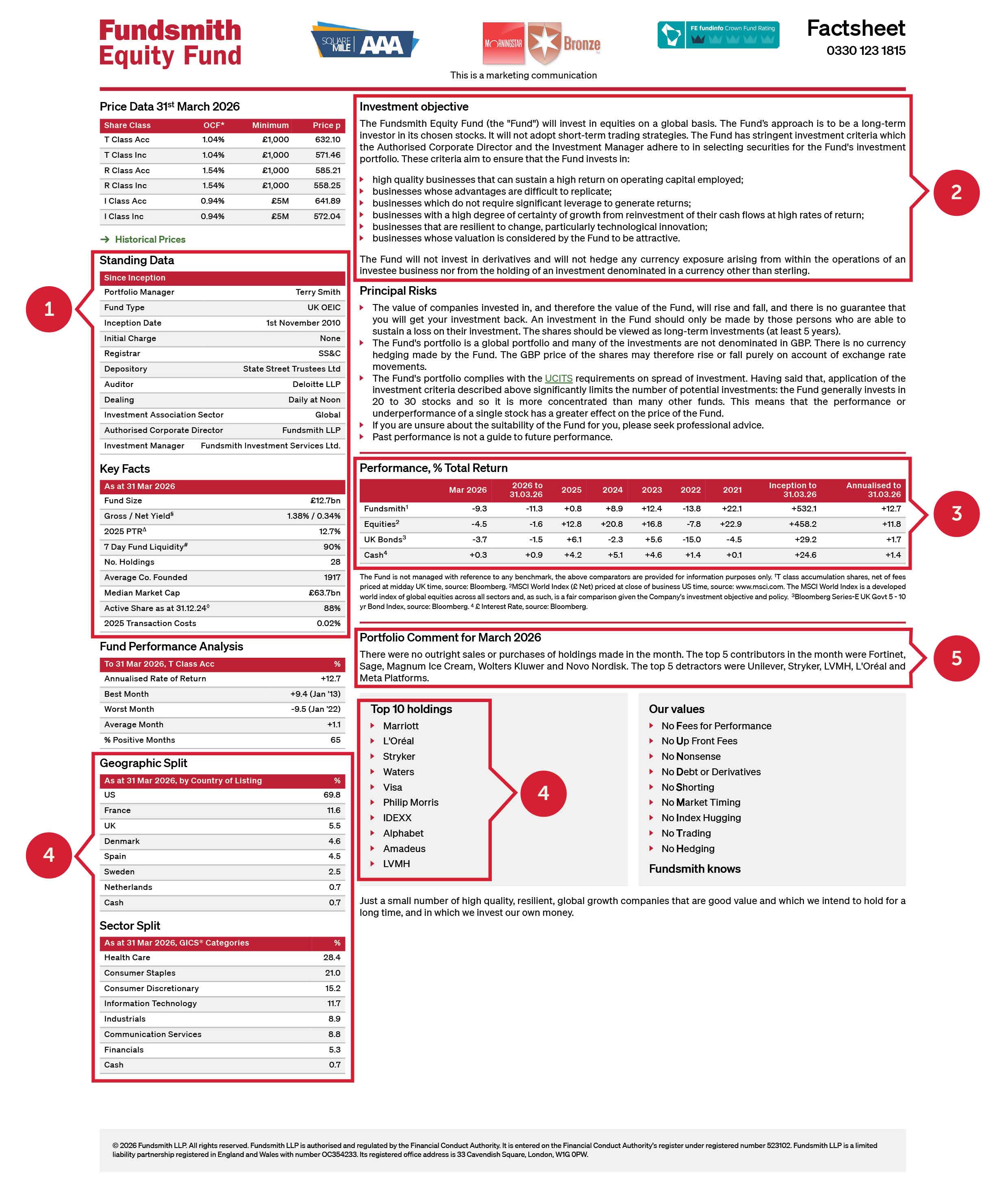
There’s a lot to take in with a monthly factsheet so here are some useful tips for navigating it.
1. Key facts
We've used Fundsmith Equity's factsheet here as an example and while all of them will look slightly different pretty much all factsheets will follow this similar format, or at least, have the information you’re after laid out in this of way.
First off are the headline facts and stats associated the fund.
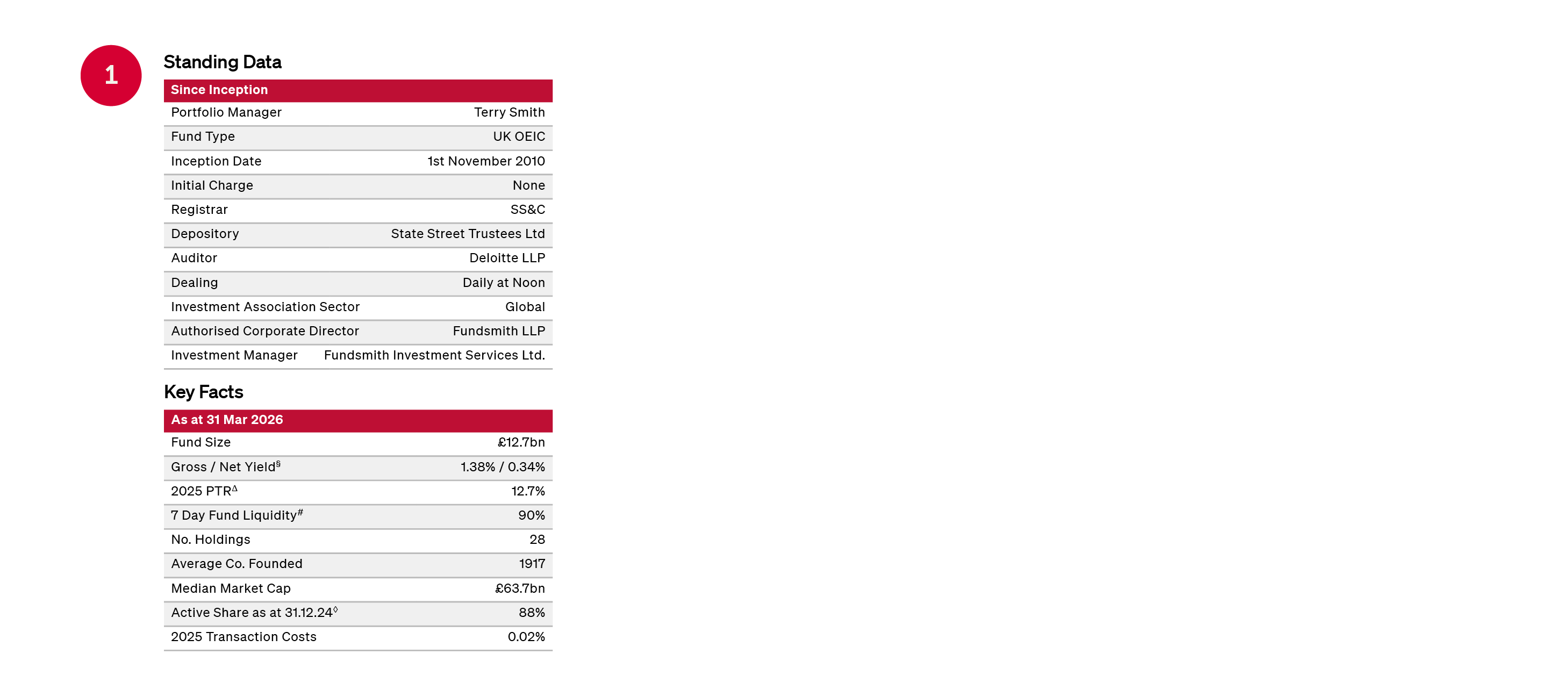
These include who the manager is, in his case the eponymous Terry Smith. Next is how big the fund is, usually listed as ‘AUM’ which stands for ‘assets under management’ or, simply like Smith has done, ‘fund size’. In this case it’s £12.7 billion.
An important thing to note that is that these factsheets usually cover the full month that has just passed, so the information is accurate until then. Something to bear in mind in case you compare the numbers on the factsheet to what is live on the AJ Bell website.
Other important facts you can pick out include what sector the fund lives in (Global for Smith) and what the ongoing charges figure (OCF, i.e. cost of investing) is.
2. Investment objective
Once you know the bullet point facts the next stage is finding out what is how this fund actually invests.
This often falls under ‘Investment objective’ but may be worded differently on some factsheets.
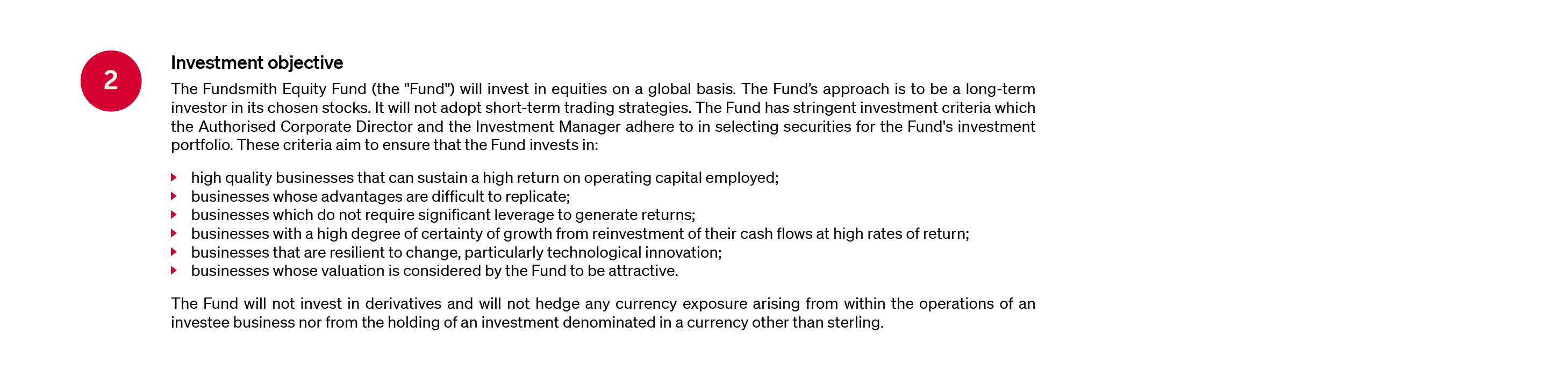
This spells out what the fund is aiming to do and how it does it. So, for Fundsmith you can see that it ‘invests in equities on a global basis’. In other words, it can invest in the shares of companies from all over the world.
‘Long-term’, ‘high-quality businesses’, ‘growth’ ‘valuation has to be attractive to the fund’, these are all bits of Terry Smith’s ‘secret sauce’ for investing if you like.
3. Performance
Now you know who’s running the fund, what it costs and how it invests you’ll want to find out if it’s actually performed well.
While past performance is not a guarantee of future returns it’s still useful to look at a fund’s track record.

In most cases, the factsheet will tell you how much total return it's made (or lost) since it was launched, plus over 10, five, three years and more short-term periods covering 12 months to one month.
This is shown versus the benchmark and the sector (items you got in section 1) to give the returns some context.
Smith adds in some extra data and shows you how much you’d have made versus holding in cash, bond and equities as an extra nugget.
4. What does it invest in?
Knowing the 10 companies someone like Terry Smith is most bullish about is a goldmine of information, and handily, you can find out what they are from the factsheet.
Active funds will often invest in around 40-60 stocks roughly but only the top 10 are named on the factsheet, usually in descending order. Meaning the top name, in this case Marriott, is the name which accounts for the biggest chunk of Fundsmith.
So while you can’t get all the assets held here, you can see what industries the fund is exposed to, which can give you a bit more insight.
Usually under ‘geographic split’ and ‘sector split’ you can find out how much of the fund is invested in different markets and how that stacks up across say healthcare, tech or oil and gas.
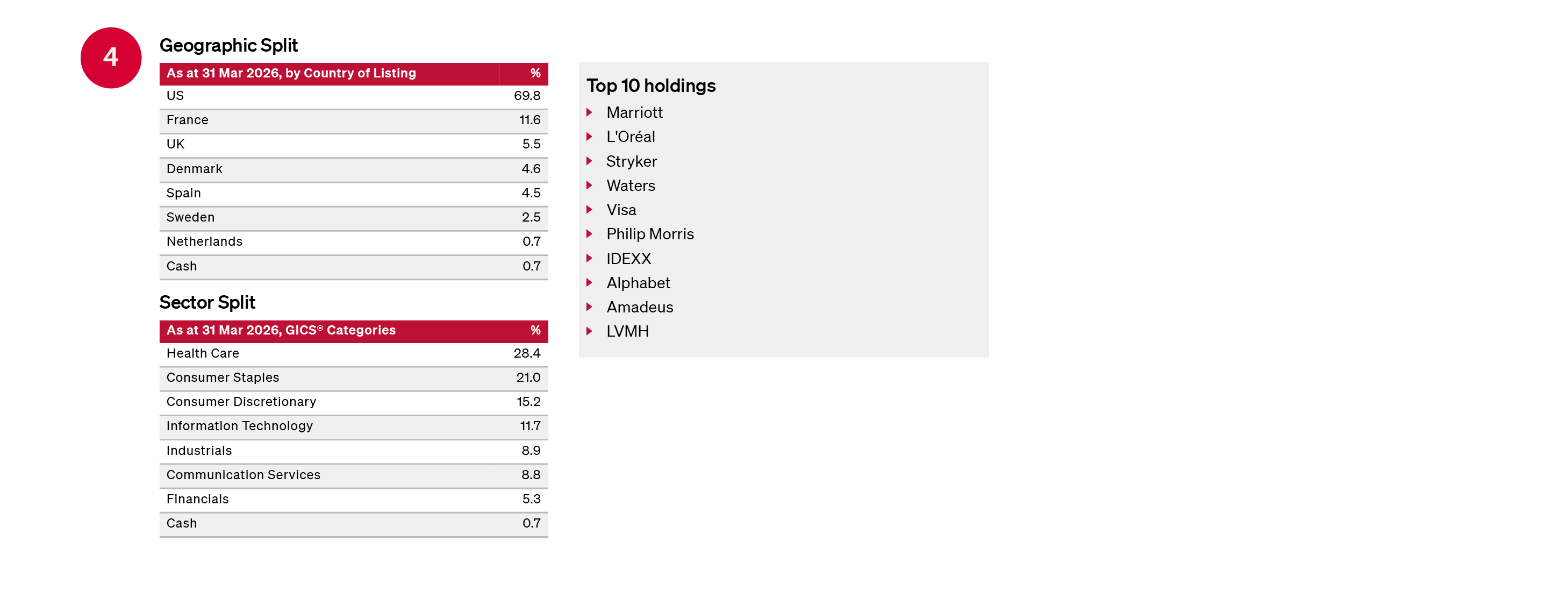
So if you really like IT stocks and think that that’s a good sector to be invested in you can check if this fund will give you that exposure or, if it’s actually not focused as much on that type of business as you might like.
5. The fund manager's comments
Finally, the fund manager’s comments.

These are monthly insights into what a manager is thinking about big events going on in the market and how that’s feeding into their portfolio decisions.
Some, like Smith, use this space sparingly and just provide a brief update on what, if any, investments, he’s bought and sold that month. Others like Nick Train opt for a few hundred words, providing a full page of his thoughts and feelings about the market and, crucially, how he sees his investments faring against the current backdrop.
All of this in a handy A4 sized document once a month which, when put to good use, can give you a lot of insight into the fund itself and the broader financial markets.

Eve Maddock-Jones: Funds and Investment Trust Writer
Eve joined AJ Bell in 2026 as a funds and investment trust writer. She was previously editor at Investment Week, reporting on all major retail investor news, covering funds and investment trusts, ETFs and regulation...