SIPP withdrawal rules

17 September 2026

6 minute read time

  • The minimum Self-invested personal pension (SIPP) withdrawal age is currently 55, though the age when you can access your pensions is rising to 57 from 6 April 2028
  • If you reach the minimum SIPP withdrawal age and don’t need to access it yet, you can leave your SIPP invested – that way it can keep growing free of tax
  • You can usually take up to 25% of your SIPP tax-free, subject to a lifetime cap of £268,275

If you're looking to access your SIPP pension for the first time, SIPP withdrawal rules give you plenty of flexibility. You don’t have to use all your pension funds in one go, so you can choose one option for a SIPP withdrawal now and decide about the rest later.

When can I withdraw my pension?

You can withdraw from your SIPP once you reach the age of 55 (rising to 57 from 2028), and you have several options for withdrawing your funds. That includes taking a tax-free lump sum (PCLS), income drawdown or an annuity, or an uncrystallised funds pension lump sum (UFPLS).

Can I withdraw my pension early?

Early withdrawal generally isn’t permitted unless you meet specific ill-health conditions. Severe tax penalties apply for unauthorised early access.

Can I withdraw from a SIPP before 55?

Normally, no – the earliest SIPP access age is 55, although this is rising to 57 from 6 April 2028.

There are exceptions, though – if you’re in ill health and can’t work, if you’ve got a protected pension age, or if you’ve inherited the SIPP from someone who has died.

How much can you take tax-free from a SIPP?  

You can take up to 25% of your SIPP as tax-free cash. This is known as the pension commencement lump sum (PCLS). The remaining 75% will be subject to income tax when you withdraw it.

You can access your SIPP in stages – and that includes your tax-free lump sum.

Tax on SIPP withdrawals

Drawdown income tax

After taking tax-free cash (PCLS), you can choose to keep the rest of your fund invested by going into drawdown. When you want to take any income, we’ll deduct income tax from your SIPP withdrawal for you.

SIPP withdrawal rules mean it’s likely that an emergency tax code will be used on your first drawdown income payment. You’ll need to reclaim any overpaid tax directly from HMRC.

If you have other taxable income, it’s possible that your drawdown income pushes you into a higher-rate tax band – meaning you could end up paying more tax on the withdrawal than you thought.

Learn more about SIPP drawdown

Annuity income

If you choose an annuity, your remaining SIPP after any tax-free lump sum (PCLS) is paid to your chosen annuity provider in exchange for a guaranteed income for life. The annuity provider will deduct tax from your regular income payments.

Find out more about annuities

Pension lump sums

25% of each lump sum you take is tax free, and the rest is taxed as income. These withdrawals are officially known as uncrystallised funds pension lump sums (UFPLS).

If you take a pension lump sum from your SIPP, 75% of the payment will be taxed under PAYE. If this is the first withdrawal from your fund, it's likely that an emergency tax code will be used. You’ll need to reclaim any overpaid tax directly from HMRC.

If you have other sources of taxable income, it's possible that the lump sum might push you into a higher tax band and you could end up paying more tax on the withdrawal than you thought.

Read more about pension lump sums 

Future pension contributions

When you first take drawdown income or a pension lump sum, you’ll trigger something called the money purchase annual allowance (MPAA).

This limits your annual allowance for defined contributions pensions, including an AJ Bell SIPP or AJ Bell Ready-made pension, to £10,000 per year. If you go over this allowance across your defined contribution schemes, you'll face a tax charge.

You won’t trigger the MPAA if you use your pension to buy an annuity, or until your first income payment after you move into drawdown.

How can I access my AJ Bell SIPP?

1. Tax-free cash and SIPP drawdown

Take up to 25% of your SIPP as a tax-free lump sum, and leave the rest invested in your SIPP as a drawdown fund. This can give you a flexible income regularly, or as and when you need it.
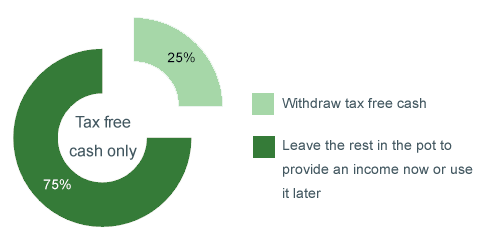
Example: Let’s say you have a SIPP worth £200,000. You could take up to £50,000 tax-free, and move the rest to drawdown where it can stay invested in your SIPP.

Or you could convert your pension in stages. This could be a good option if you need some cash, but don’t need to take 25% of the whole fund.

Each time you convert part of your SIPP, you withdraw up to 25% of that amount tax-free, with the other 75% staying invested and moving into drawdown. You can take 25% tax-free cash from what you don’t convert in the future.
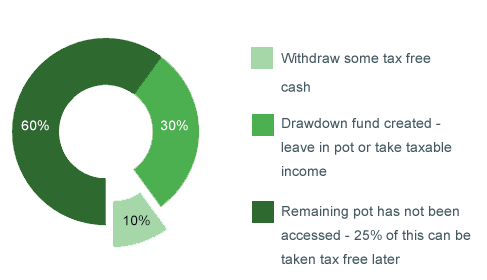
Example: Of your £200,000 SIPP, you convert £80,000 and withdraw £20,000 as tax-free cash. You create a drawdown fund for the other £60,000, from which you can take a taxable income at any time. The amount you don’t withdraw is also left in the pot to benefit from investment growth and income, and you can take 25% tax-free from it in the future.

2. Pension lump sums

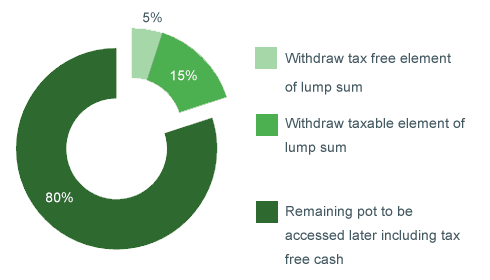
A single payment where 25% is tax free, and the remaining 75% is taxable. This option lets you take a series of smaller amounts, while leaving the rest invested to access more of in the future. Or you can even withdraw the whole pot.

Smaller amount
Whole pot
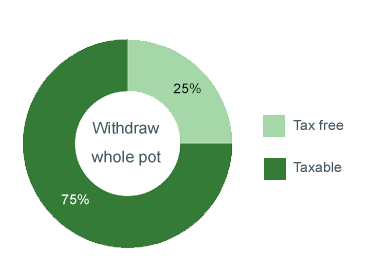
Learn what you should think about if you’re considering withdrawing your whole SIPP.

3. Tax-free cash and annuity

Take up to 25% of your AJ Bell SIPP as a tax-free lump sum, and the rest is transferred to an insurance company to pay you a guaranteed income for the rest of your life.

Learn more about the differences between annuities and drawdown.

Get retirement ready

As you start winding down your working life, it’s important to think about the type of retirement you want and what your finances look like.

Our retirement checklist is a good place to begin, covering everything you’ll need to consider, and our pension calculator can help you understand how much you’ll have available.

SIPP withdrawal FAQs

Get your money working for you