
How I invest: From trying to cover train fares to being a student of Buffett


Archived article: Please note that tax, investment, pension and ISA rules can change and the information and any views contained in this article may now be inaccurate.
Related
news
20 March 2026
Not panicking, sticking to the plan and thinking about opportunities4 min readAuthor19 March 2026
Markets braced for Nike earnings as tariffs weigh on turnaround hopes3 min readAuthor
Shares Magazine
“Do your reading.” That’s the first step for anyone wanting to take the plunge into the stock market, according to 56-year-old Simone.
For her, what this looked like was six months spent properly getting to grips with the basics before she made her first investment; learning the difference between shares and funds, then passive and actively managed funds.
Early on, she developed a simple mantra to help guide her through: “If I don’t understand it, I don’t buy it”. This has kept her away from ‘hot’ areas like cryptocurrency.
Taking the first steps
Londoner Simone made her first investment back in 2016 just after the Brexit vote. This was an unexpected event which acted as catalyst for her to take proper control of her finances and her future. Simone started out with £20,000 in her portfolio and now, 10 years later, having seen it through the pandemic, Russia’s invasion of Ukraine, ‘Liberation Day’ and various UK chancellors, it’s comfortably sitting in six figures, having achieved a return of around 10% a year.
Like most people, Simone was holding her money in a run of the mill savings account which was offering a low interest rate and she became dissatisfied.
She, like many others, thought that moving her hard-earned savings out of her account and putting it to work in markets was high risk, “but I was going to do it”.
“No one really wanted to take the risk of making any investments during that period of Brexit and I decided ‘you know what? I’ll give it a try’, because I don’t think I could do any worse”.
At the start Simone had very short-term, practical goals for her investing; making enough to cover the travel costs for her work in the charity sector.
Working part time for a disability rights organisation meant a reduced income while her time travelling around the country as a peer advocate, helping people diagnosed with autism move out of hospitals and into their own homes, put added pressure onto her purse too.
Simone also took a firm grasp of her pension following the pandemic after being “shocked” at how her workplace pension was performing. She transferred it into a SIPP and over the past 18 months has managed to boost her pot by 35%.
Where did Simone invest first?
After her extensive reading and research Simone made her maiden investment into a global ESG tracker fund, a very deliberate choice based on her personal investment requirements.
Having spent her career working in health care, Simone decided she would only give her money to companies helping to drive better outcomes in her sector.
This has led to deliberately avoiding companies involved in the US death penalty supply chain, or those supporting the Assisted Dying Bill currently before the UK Parliament. “I try to invest ethically where I can,” she says.
Her dual focus of investing to make the world a better place and to get some decent returns for herself makes Simone an increasingly rare breed: a self-proclaimed ESG investor.
The basic ESG idea can be adapted person-to-person depending on their priorities. For example, some wouldn’t invest in anything from the oil and gas sector due to the negative environmental impact, but Simone is open to holding them as she focuses more on the ‘S’ factor.
She faced a potential test of her moral mettle in recent years when the outbreak of several hot wars in the era of a more combative US president and European governments committing massive amounts spending on defence, saw weapons manufacturers make some of the best equity returns in recent years.
But Simone wasn’t tempted to get involved, partly due to her research process. Every time she wants to make a trade Simone asks herself: ‘Why should I invest?’ ‘Why shouldn’t I invest?’
This helps her deal with common investment emotions like ‘FOMO’ (fear of missing out) because she fully understands why she didn’t buy into the latest trend. Hence when it came to defence stocks, Simone knew that trade “wasn’t for me”.
“I avoid anything that’s going to cause harm, however attractive that might be,” she says.
That doesn’t mean it’s a foolproof process. One case of buyer’s remorse for Simone was investing in emerging markets the night Russian troops were circling Ukraine. “I thought, ‘oh my god why didn’t I see it coming?’,” she says.
What is an ESG investor?
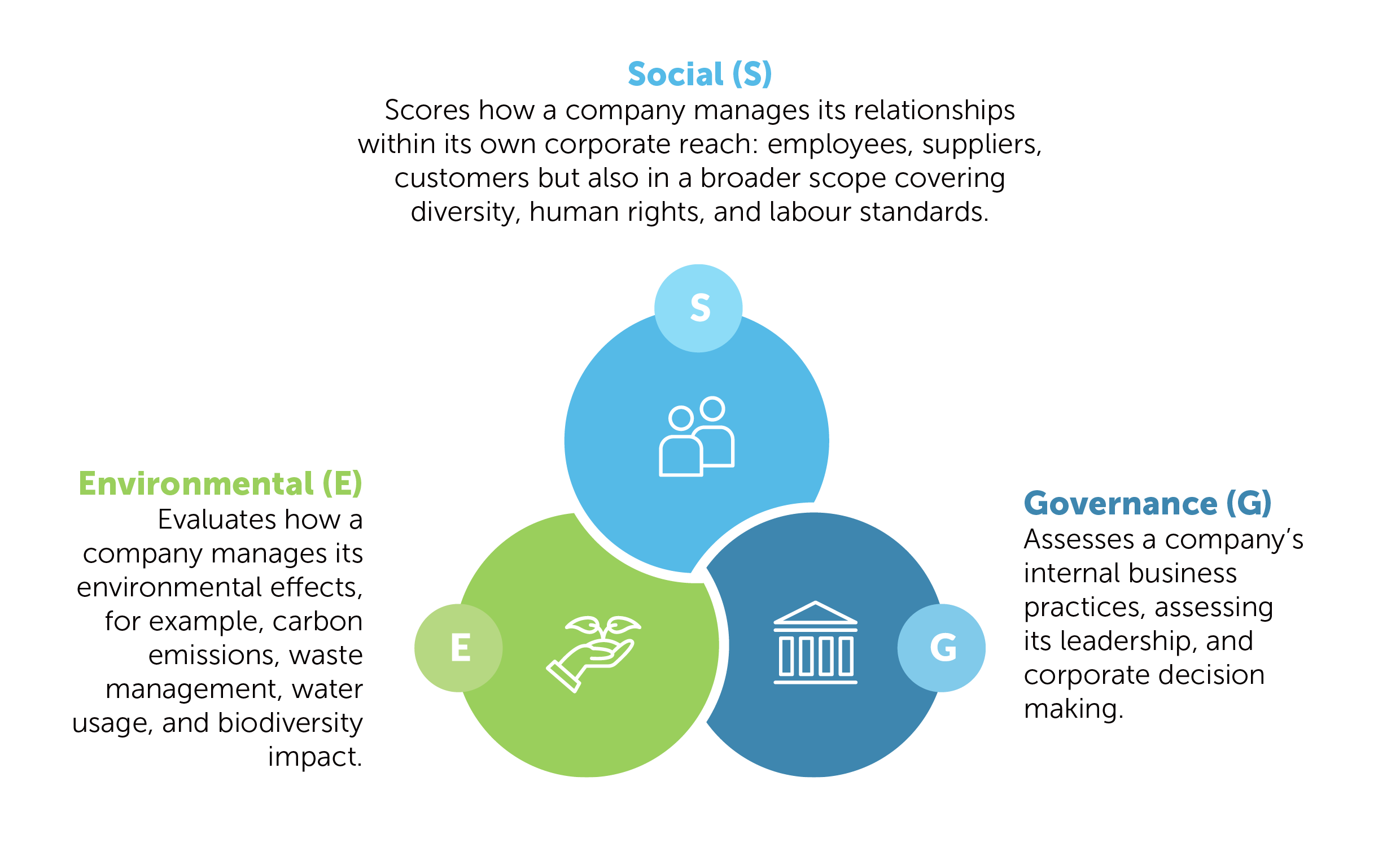
ESG stands for ‘environmental, social and governance’, and involves choosing investments based on factors associated with moral behaviour rather than purely financial returns.
Otherwise known as sustainable or ethical investing, it has been around for decades, with BMO launching the first active fund of this ilk back in 1984.
This investment style gained massive popularity during the pandemic, when UK savers put almost a billion pounds a month into responsible investment funds in 2020, a 66% annual increase, according to data from the Investment Association. However, it has fallen off significantly since. In December 2025 alone, responsible funds saw a £348 million exodus.
Learning lessons from Warren Buffett
After making returns she was happy with from her first buy, Simone broadened out, investing in the L&G Healthcare Technology & Innovation UCITS ETF, a smattering of FTSE trackers, the Lazard Emerging Markets fund, convertible bonds, gold and silver, where she recently trimmed her exposure. She divested from technology stocks last year when the volatility was becoming “too manic” for her.
One investment mantra she has been a follower of is from Warren Buffett: buying and holding for the long term. Simone has aligned herself with his ‘steady eddie’ approach as her investing goals developed.
Back when she started out with her SIPP, Simone says her mistake was moving things around too much.
Having made some solid returns on her initial investment, Simone’s confidence grew and she expanded her investment timeline further into the future than just the next London to Manchester train.
Buying property and having a good life, both now and in retirement, are her major long-term goals.
Over time, Simone’s approach to risk evolved too and instead of it being something that she tries to avoid it’s now something she can make an informed judgment call on, aided by having proper portfolio diversification.
This involves taking her own advice and continuing to read to help her understand what the big picture conversations around AI and technology mean for her investments.
“I’m paying much more attention to things and upping my own game,” Simone says.

Eve Maddock-Jones: Funds and Investment Trust Writer
Eve joined AJ Bell in 2026 as a funds and investment trust writer. She was previously editor at Investment Week, reporting on all major retail investor news, covering funds and investment trusts, ETFs and regulation...