


Archived article: Please note that tax, investment, pension and ISA rules can change and the information and any views contained in this article may now be inaccurate.
Related
news
12 November 2025
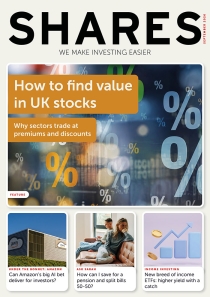
Welcome to the new-look Shares magazine – why you should read it and what to expect1 min readAuthor
Shares Magazine
While global equity tracker funds such as ETFs are firm favourites among everyday investors due to their simplicity and low costs, passive income products are less common in the average portfolio. That might change as more investors discover the options available.
Historically, investors gravitated towards actively managed funds in the search for income. For example, Artemis Income is the biggest fund by assets in the IA UK Equity Income sector at £5.2 billion, according to FE Analytics. It has outperformed the FTSE All-Share over the past one, three, five and 10 years, the kind of record that helps to draw in investors.
Not all active funds have been that successful. There are UK equity income funds that have struggled to consistently beat the market, leaving investors frustrated. The same applies to other sectors.
More investors are asking what the point is in paying higher fees for outperformance if they are not getting it. That has been a key driver for the growth in passive funds including ETFs that offer broad exposure to stocks and shares, such as global equity funds. Certain people are happy just to follow the market, rather than try and beat it.
The dominos might fall and trigger similar behaviour elsewhere in a portfolio. The breadth of income-focused ETFs might pique someone’s interest in this situation, but as is often the case with investing, there is not a one-size-fits-all approach. Passive income choices vary in shape and size, and there are key things to consider with each one.
How dividends differ between companies
Before we dive into the range of options, it is worth understanding how dividends differ from company to company. It is important to stress that companies do not guarantee dividend payments, and they are free to cut or cancel them at any time.
Companies typically fund dividends from surplus cash. They look at cash generated from operations and decide what to reinvest back into the business. The rest can help fund debt repayments, acquisitions, share buybacks and dividends, or having something for a rainy day.
Certain companies have ongoing demands on their cash, such as the need to upgrade technology or facilities, which might constrain the amount left for dividends. Others may have less demand for their cash so they pay more in dividends, hence they might fall under the category of high yield.
You could argue the latter type of company has lower growth prospects and so it uses dividends to make its shares more attractive to investors. Life insurance is one sector where there are multiple examples of this.
Faster growing companies such as ones in the technology sector might deliver a greater proportion of returns for investors through growth in the value of their shares rather than in income. For slower growth companies, the reverse is often true.
Core categories of income ETFs
Aside from charges, the most important things to consider with income ETFs is the way they filter the market. They track specific indices, with certain ETFs focusing purely on yield and others layering on additional factors.
Type 1: High-yield ETFs
Investors curious about the options for income ETFs might start with funds that track a basket of the most generous dividend payers.
Look for ETFs with terms such as ‘high yield’ or ‘super dividend’ in their name as these will follow indices made up of companies with the biggest dividend yields. These funds either take a global perspective or focus on a specific geography, and you typically find bigger yields in Asia and Europe (including the UK) than the US.
The downside of ETFs that only focus on biggest dividends is that some – but not all – of the names in the underlying portfolio might have optically high yields due to share price weakness. A stock might have declined in value as the market is worried about challenges facing the company or its sector.
As a hypothetical example, Company X trades at 50p per share and pays 2.5p per share in dividends, equating to a 5% yield. If the shares fall to 25p due to market concerns, the yield moves to 10%. If the company goes through a bad patch, it might cut the dividend, meaning the 10% yield was too good to be true and was a warning sign.
Anyone concerned about this situation might prefer to look at income ETFs that have stricter criteria than just highest yield. While you might not receive as much in dividends, a potentially lower income stream might be a small price to pay in the search of more consistent dividends.
Types 2 and 3: dividend aristocrats ETFs and quality income ETFs
Two types of ETFs that are more demanding of the companies that get a place in their underlying portfolio have ‘dividend aristocrat’ or ‘quality dividend’ / ‘quality income’ in the fund name.
If you are relying on income from investments to pay bills, it is important to consider dividend sustainability. You not only want dividends to be dependable but also grow each year, preferably by more than the rate of inflation to preserve your purchasing power. That is where ‘dividend aristocrat’ ETFs come into focus.
This type of ETF tracks indices made up of companies that have raised their dividends for at least 10 years in a row. Certain dividend aristocrat ETFs even demand a history of 25 consecutive years of dividend growth. Such characteristics can indicate a company has durable earnings and a resilient business model.
ETFs that feature the words ‘quality dividends’ or ‘quality income’ will track an index made up of companies that exhibit financial strength through qualities like a balance sheet – meaning they have little or no debt. This narrows the focus on companies potentially well placed to pay a growing stream of dividends, although even the strongest companies can still face occasional setbacks.
Type 4: dividend leaders ETFs
Alternatively, there are ETFs with the term ‘dividend leaders’ in their name, indicating they follow an index that screens for companies with a history of being consistent dividend payers and the capacity to sustain their dividends. Sometimes these ETFs will also look for ESG characteristics, namely companies that screen positively for environmental, social, or corporate governance factors.
Other types of income ETFs
The world of income ETFs spans beyond stocks and shares. Bonds, property, and money market funds are also rich pickings for income.
Bond ETFs have the greatest choice, with funds offering exposure to either corporate bonds, government bonds or a mixture of both. Factors influencing the amount of income you earn from a bond ETF include whether the bonds are higher or lower risk, and the duration of the bonds.
Two important points on yield and income payments
With any type of income ETF, it is important to note the published yield is not necessarily the exact amount you will receive. The yield is based on the past 12 months’ payout, not what is coming down the line. The published figure gives you an idea of what is possible, but it could end up being higher or lower.
Just remember that if you want to sit back and let the cash roll in, select ‘distributing’ versions of an income ETF rather than ‘accumulating’ ones as the latter automatically reinvest dividends rather than paying them out.

Dan Coatsworth: Head of Markets
Dan Coatsworth is AJ Bell's Head of Markets. Dan has been with the company since December 2012 and has more than 18 years' experience in the industry, following the markets and all things investing. He...