
Where do I start with constructing a well-rounded portfolio?


Archived article: Please note that tax, investment, pension and ISA rules can change and the information and any views contained in this article may now be inaccurate.
Related
news
12 November 2025
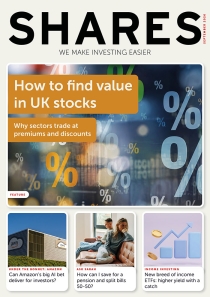
Welcome to the new-look Shares magazine – why you should read it and what to expect1 min readAuthor
Shares Magazine
For most people, putting together a diversified portfolio of investments is their best route to achieving their financial goals. A well-constructed portfolio can smooth investment returns, making it easier to stay invested over the longer term.
The first part of the article discusses spreading risk in relation to broad asset types while the second part delves into the construction of a well-balanced stock portfolio.
Everyone knows the dangers of putting all your eggs in the same basket. This can be applied to investing, where concentrating investments in a single stock or industry exposes an investor to avoidable risks and potential loss.
Take John, who works in the oil industry and is very knowledgeable about the companies in the sector and how they make money.
He believes buying a selection of oil stocks reduces his risk but fails to fully appreciate how the oil price affects the stocks in his portfolio in the same way.
What does risk mean when investing?
Whether you are a complete beginner or a more experienced investor, it is important to understand your tolerance for risk.
Consider two different investors, James and Jane. James gets uncomfortable if the value of his portfolio moves up and down by more than 10% a year while Jane isn’t flustered if the value of her portfolio swings around by 15% to 20% a year.
We can say that James has a lower risk appetite than Jane. There is no right or wrong amount of risk appetite, it just depends on each person’s investment goals, time horizon and temperament.
In investing, risk comes down to understanding the uncertainty of investment returns from different assets.
A low-risk investment typically has a predictable return while a high-risk investment might make a lot of money or lose some.
Risk and return are inextricably linked. Safer assets such as cash in the bank have historically delivered the lowest returns. Riskier assets like stocks and shares have historically delivered the highest returns.
The catch is stock returns are far more variable which means they can inflict painful losses over shorter periods. Heightened market volatility is often driven by emotional factors such as fear and greed.
Over periods of five years or more, stock prices tend to follow the trajectory of profit and cash flow. However, forecasting profit is not easy and it is possible to get this wrong.
What assets are available to me?
For most of us we are likely to be choosing from three broad asset types – cash, bonds and shares. (Though property and certain commodities can come into the mix too.) Each asset has a different level of uncertainty associated with its return.
The most certain return comes from putting money into an interest-bearing bank account.
Deposits at UK banks are protected up to a value of £85,000, so let’s say you put £1,000 into an easy access savings account which pays 2% or £20 a year. That is a very certain outcome, given the protection of the government guarantee.
Government bonds (a type of I.O.U issued by the state) are close to risk-free investments because the state can always raise taxes to service its debts. The state issues bonds with varying maturities from a few months up to 50 years.
For example, let’s say James buys £1,000 worth of gilts which mature in 2035. UK bonds are called gilts because historically the paper certificates had gold-coloured gilt edges.
The annual interest rate, also called the coupon of the bond is 4.75%, which reflects prevailing market rates.
This means the bond will pay James a fixed annual income of £47.50 a year (4.75% of £1,000) until 2035 at which time he will receive his £1,000 back.
Bonds are usually issued at a price of 100, which is called par, and they are redeemed at par. If James holds the investment until the bond matures, he will receive a stable return of 4.75% a year.
After a bond is issued, its price can move up or down. This affects the bond’s yield which is the annual coupon divided by the price. Let’s say the price moves to 105, the yield falls to 4.5% (4.75 divided by 105).
It is worth pointing out that bond payments are contractual which means investors have some protection in the event the issuer cannot service or repay the debt. This is more relevant for corporate bonds which carry greater credit risk.
Can bonds provide protection from falling markets?
As well as providing stable income, bonds have another feature which can make them useful in the context of constructing a balanced portfolio.
Investors tend to flock to the relative safety of bonds during periods of market upheaval and economic recessions.
Increased demand pushes up prices (yields fall) which can offset some of the losses incurred by stocks. This in effect, provides a kind of ballast for a portfolio. That is the theory.
In practice, this relationship does not always hold. It can flip around with bond prices dropping at the same time as stock prices.
A recent example was 2022 when central banks raised interest rates to fight inflation, with government bonds inflicting bigger losses than stocks and corporate bonds falling at roughly the same rate as equities. Bond prices are sensitive to the rate of inflation because the income they pay is fixed.
Do stock markets go up in the long run?
A study by JPMorgan asset management based on US stock market data going back to 1950 showed stocks held for a decade or more have a much narrower range of potential returns.
For example, rolling one-year returns from stocks ranged from 61% to minus 43%. Over 10 years the extremes moved down to 21% for the best 10-year rolling period to minus 3% for the worst. Over 20 years the best return was 18% a year and the worst was 4% a year.
This demonstrates the importance of remaining invested and sticking with a strategy that aligns with your individual risk profile and objectives.
In the long run stock markets tend to rise because the economy grows and companies in aggregate grow their profits. Bonds by contrast do not have growth potential.
This is why it makes sense for most investors to allocate a proportion of their portfolios to stocks and shares.
In general, younger people and those with a higher risk appetite are likely to hold a higher proportion of stocks.
Someone in their 20s or 30s has a potentially longer investment horizon which means they do not need to worry too much about the short-term ups and downs of the stock market.
Those nearer to retirement are more sensitive to any sharp falls in the stock market, which would reduce the value and income potential from their portfolio.
How diversified should I be?
The idea behind diversification is to smooth out investment returns. This can be achieved by creating a portfolio of stocks (and other asset classes) with some moving up and others moving down, cancelling each other out.
Academic studies suggest holding 20 to 30 individual stocks is enough to reap the benefits of diversification, but it this also depends on the size of the companies in the portfolio and other factors.
A portfolio comprised of smaller companies might need 30 to 50 names to achieve the same level of diversification as a large-cap focused portfolio.
The main aim should be to try to achieve a balance of exposures to the broad industry groupings and not get too concentrated into one area of the market. Holding companies across the size spectrum can also increase diversity.
Remember, just because a company is listed in London does not necessarily mean it is domestically focused. For example, more than half of the revenue generated by the companies in the FTSE 100 comes from overseas.
A practical and cost-effective way to achieve diversification is to consider using ETFs (exchange traded funds) and index trackers of major stock and bond indices around the globe.
Holding individual stocks alongside ETFs can also be an effective way to spread risk. Remember to check what each ETF holds to ensure you are not duplicating holdings and inadvertently creating concentration risk.
Finally, beware of the risk of holding too many positions where the costs start to outweigh the benefits, and you end up with an unwieldly list of companies and funds in a portfolio, which is time consuming to monitor.
What might a typical portfolio look like?
The charts show two example asset allocations based on different appetites to risk. The average risk appetite allocation has a lower weighting towards stocks and a higher weighting to bonds, which should, in theory, help smooth out returns.
The higher risk appetite allocation is more weighted towards stocks and less to bonds, which means returns are likely to be bumpier.
Are you a private investor with an interesting story to tell?
Get in touch for the chance to share your experiences and to explain why you started investing and how you invest.
We will pay £50 in John Lewis vouchers as a thank you to anyone whose story is published in the digital magazine.
Whether you are an experienced investor or are just starting out, we would like to hear about your investment strategy and how you manage your portfolio.
Maybe you belong to an investment club, and would like to talk about these meetings? Are you retired and looking to make your money last for years to come? Are you in your 20s or 30s and have only made small steps into your investment journey? Perhaps you’re in your 40s and 50s and still accumulating wealth?
Drop us a line with your name and two lines describing your investment experience. For those picked to feature in the magazine, we’ll be in touch to get the full story.
Contact
Email us at sharesmag@ajbell.co.uk with the words ‘My portfolio’ in the subject line.
Terms and conditions
The offer
Subject to the terms below, the offer is to receive a £50 digital gift voucher when your experiences as an investor are published in Shares magazine (“Case study”).
The offer is open between 13 November 2025 and 30 September 2026 (“Offer Period”).
Payment is only made to case studies published in Shares magazine. Submissions do not guarantee your case study will be published. The Editor decides which case studies to publish and in which format.
Eligibility rules
You must be 18 or over and resident in the UK to qualify for the promotion.
Employees of AJ Bell (the publisher of Shares magazine), its affiliated companies, and the immediate families of any such employees are not eligible for the offer.
Receiving the offer
If your case study is published is valid, a link to download the voucher will be sent to your registered email address within 4 weeks of the article being published.
AJ Bell will not take any responsibility for your failure to supply accurate information which affects acceptance or delivery of the offer.
Details about how we may process your personal information can be found here.
General
We reserve the right to amend, suspend or withdraw the offer and/or these terms without prior notice and at our sole discretion by posting a notice on our website.
AJ Bell will not be held liable if any unforeseen event means that we are unable to fulfil this offer. In this event, no compensation will be payable by us.
By making a claim in the offer, you are deemed to accept the terms and conditions of our digital gift voucher partner.
The offer is non-exchangeable, non-transferable and no cash alternative is offered.
By participating in the offer, all claimants are deemed to accept these terms and conditions.
The Promoter of this offer is AJ Bell. The Promoter’s principal place of business is at 4 Exchange Quay, Salford Quays, Manchester, M5 3EE. The Promoter may exclude from participation anyone who we believe to be taking unfair advantage of the offer.

Martin Gamble: Shares and Markets Writer
Martin Gamble is Shares and Markets writer at AJ Bell. He was previously the Education Editor of Shares Magazine. He has been with the business since 2019.
Martin graduated from the University of Kent in...