
Why are US government bond yields rising and why is it impacting my investments?


Related
news
Shares Magazine

Ask the experts. Russ Mould is on hand to answer your queries about the financial markets. If you'd like a question considered for a future edition, send it in now.
Or alternatively leave a rating for the article and include your question in the comment box.
I’ve noticed some losses in my portfolio as US government bond yields are going up. Why is this happening and why didn’t the US Treasury’s attempt to bring yields down work?
Greg
Russ Mould, AJ Bell Investment Director, says:
America is trying to massage down the oil price by releasing its strategic reserves, buoy the yen by selling euros against it and cap its own borrowing costs by buying long-dated government bonds, or treasuries, and issuing near-term treasury bills instead. Throw in a near-10% shareholding in Intel and investments in a range of private companies in industries that range from mining to defence to technology, not to mention an ever-changing list of tariffs and, in some ways, America no longer looks like the land of the indefatigable invisible hand that it claims to be.
Rather than fighting shy and applying higher equity risk premia (and thus lower valuations), the US stock market continues to take this in its stride, at least for now. Holders of fixed-income instruments look less happy, however, and the bond market could yet have a far greater say across all of the asset classes in investors’ portfolios, and that includes those where there is any exposure to American assets or not.
Treasury yields close to financial crisis levels
US bond yields are creeping higher to such a degree that 10-year and 30-year treasury yields stand near their highest levels since 2007-2008.
Back then, the trajectory was down, whereas three fears are now exerting a strong upward pull.
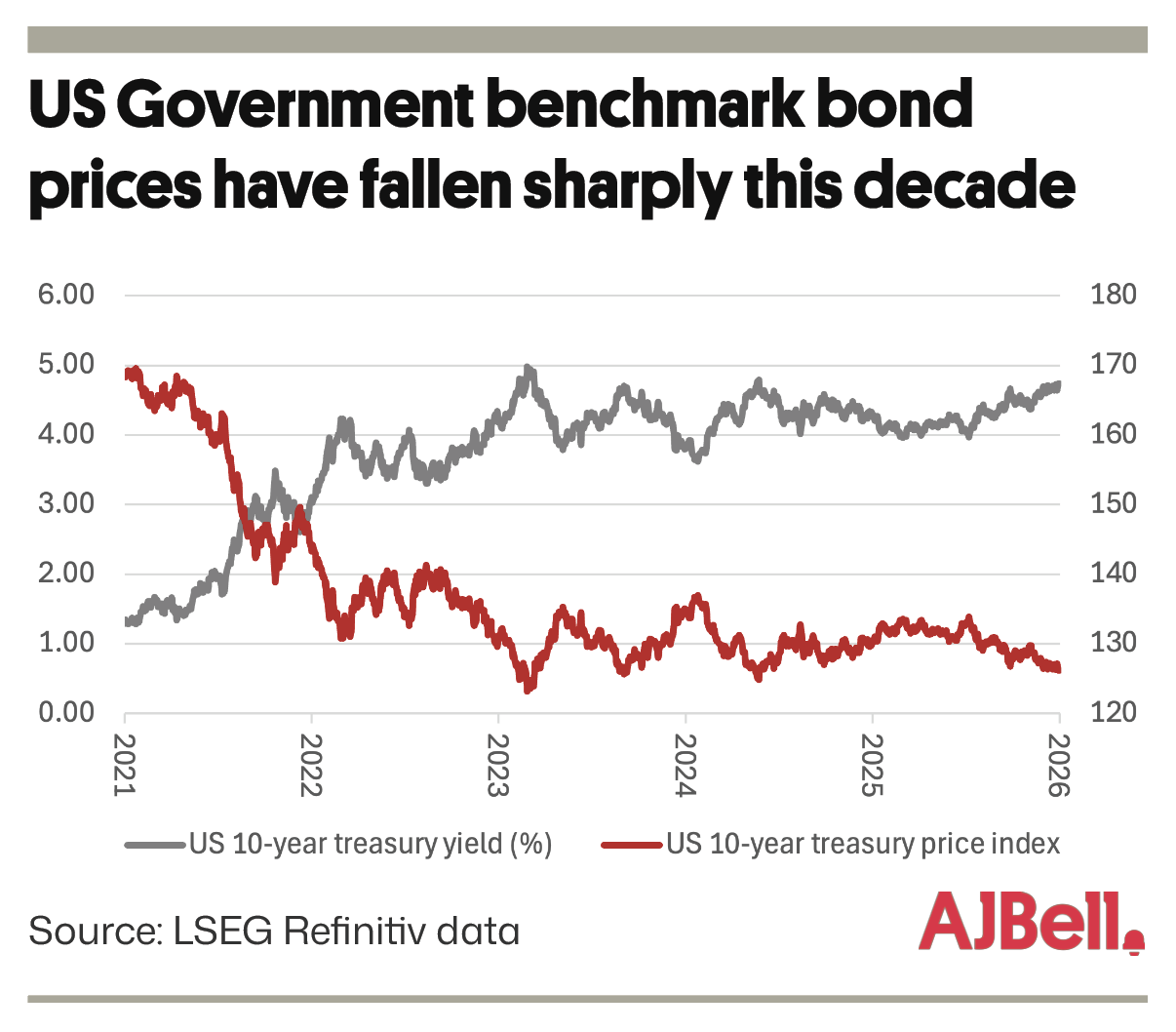
The first is inflation. Based on the consumer price index, the US rate of inflation has exceeded the US Federal Reserve’s 2% target every month since March 2021, bar one. In response the US Federal Reserve has raised the headline Fed Funds rate from 0.25% to 3.75% since 2022.
The second is the arrival of new Fed chair Kevin Warsh. He has talked tough on inflation and been particularly critical of how the US central bank has a bloated balance sheet, as a legacy of quantitative easing (QE) and bond-buying programmes that were designed to keep borrowing costs low and drive demand for credit. Warsh’s desire to reduce the Fed’s bond holdings removes a buyer from the market.
The new chair is also scrapping ‘forward guidance,’ so markets no longer get a steer on what is coming next and have to set the price of money for themselves. That is a laudable aim, but right now markets do not like what they see.
That is because of reason three, namely galloping growth in American government borrowing. July showed a monthly deficit of $432 billion, the worst figure since March 2021 and one big enough to take total US public debt to $40 trillion, double where it was just a decade ago. President Trump is still calling for money defence spending, to cover the campaign in the Middle East, and November’s mid-term polls will fire the starting gun on the race to the White House in 2028’s ballot, with neither early-stage Republican nor Democratic candidates thus far espousing any policies that lean toward austerity.
More borrowing means increased issue of treasuries and if the supply of something goes up then its price tends to go down. That is exactly what is happening in the US government bond market.
Let’s twist again
Enter US Treasury Secretary Scott Bessent, who can see the danger posed by rising bond yields, as they add to America’s interest bill. This is already running at an annualised rate of $1.25 trillion, or a fifth of the Government’s tax take, compared to around a tenth in the UK. The average maturity is also barely six years, compared to more than 13 in the UK, according to figures from the Congressional Budge Office and UK Debt Management Office respectively, so America is more exposed to higher bills as old bonds mature and new ones are issued, if headline interest rates stay where they are or go higher.
Bessent’s currency market interventions are designed to dissuade Japan from selling its $1.1 trillion in treasury holdings as a source of dollars so the Bank of Japan can use them to buy yen, while the Federal Reserve is returning to something that looks like 2011’s Operation Twist (OT) under Janet Yellen, as it sells long-dated bonds and issues shorter-dated ones to cap yields and borrowing costs.
But operations worth $4 billion a time are not going to really move the cost of a $40 trillion debt mountain, and bond markets are responding with understandable scepticism. Bessent seems to be watching the 5% threshold on the 10- and 30-year yield, and investors should be, too. After all, higher returns on bonds may tempt investors away from equities and also act as a brake on demand for credit, economic activity and ultimately corporate earnings, just when investors are paying record-high multiples for record-high US company profits.
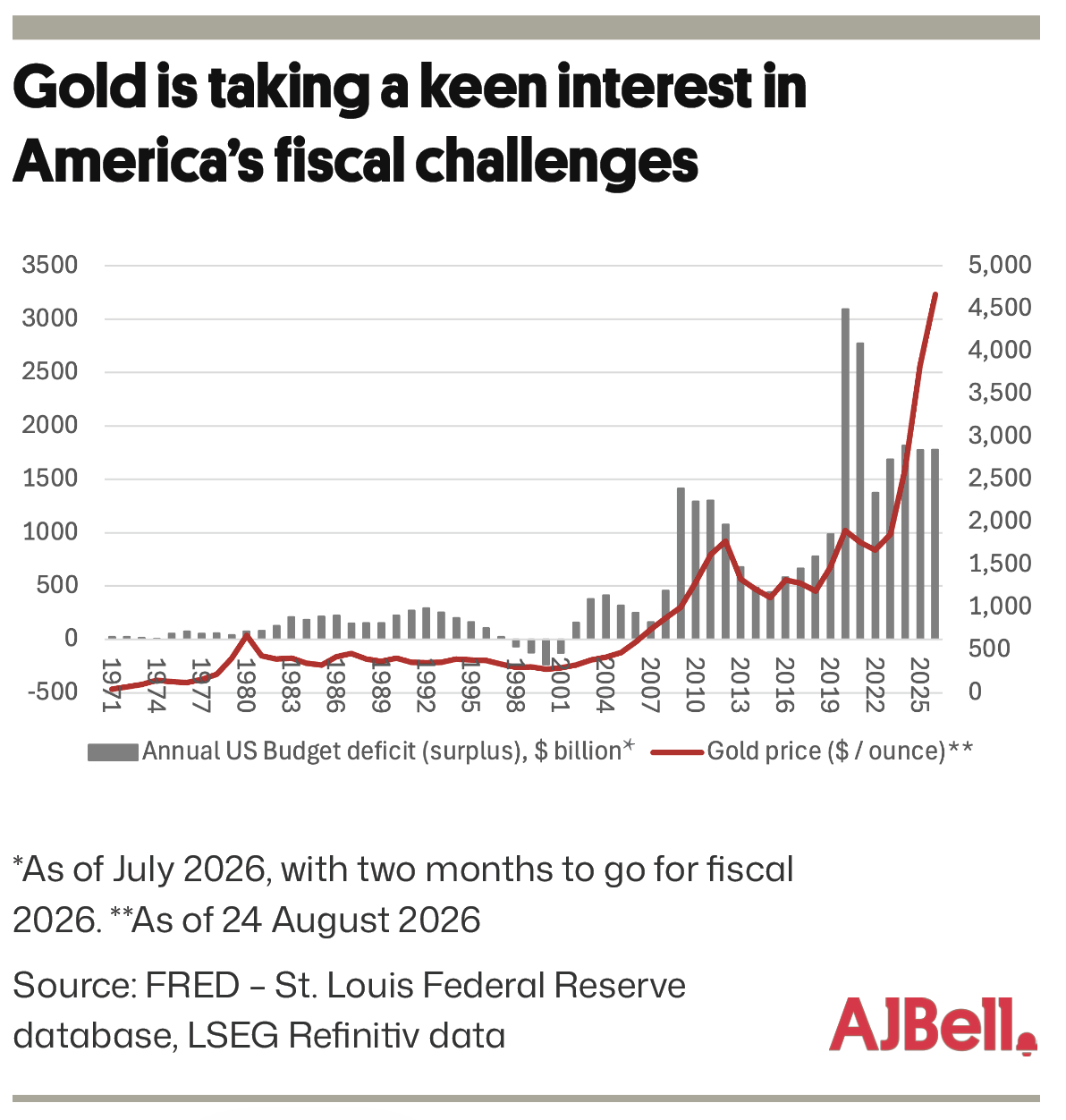
The stakes could not be higher, and the gold price is taking note. Its latest upward surge could be calling Warsh’s bluff, in the view the Fed will not raise rates because America cannot afford it and let the US take its chances with inflation instead, or it could even be saying that OT will be followed by more QE and balance sheet expansion.

Russ Mould: Investment Director
Russ Mould is AJ Bell's Investment Director. He has a Master's degree in Modern History from the University of Oxford and more than 30 years' experience of the capital markets.
He started out at Scottish...