


Related
news
12 November 2026
What do the letters in fund names mean and which version should I pick?7 min readAuthor12 November 2026
Are ETFs always cheaper? Ongoing charges and trading costs explained7 min readAuthor
Shares Magazine

Ask the experts. Russ Mould is on hand to answer your queries about the financial markets. If you'd like a question considered for a future edition, send it in now.
Or alternatively leave a rating for the article and include your question in the comment box.
Could rising Japanese bond yields affect my investments even if I do not own Japanese shares or funds?
Sarah, Bristol
Russ Mould, AJ Bell Investment Director, says:
It is almost a year since Sanae Takaichi was elected as Japan’s one-hundred-and-fourth Prime Minister, and its first female leader. She has continued to champion fiscal stimulus, loose monetary policy and a push to revise Article Nine of the constitution, whereby Japan can strengthen its military capability and increase defence spending to 2% of GDP (gross domestic product).
None of this greatly differs from the ‘Three Arrows’ programme successfully implemented by Shinzō Abe from 2012 to 2020 and, from the point of view of financial markets, it is having very similar effects. The yen continues to go down, and the Nikkei 225 benchmark equity index continues to go up.
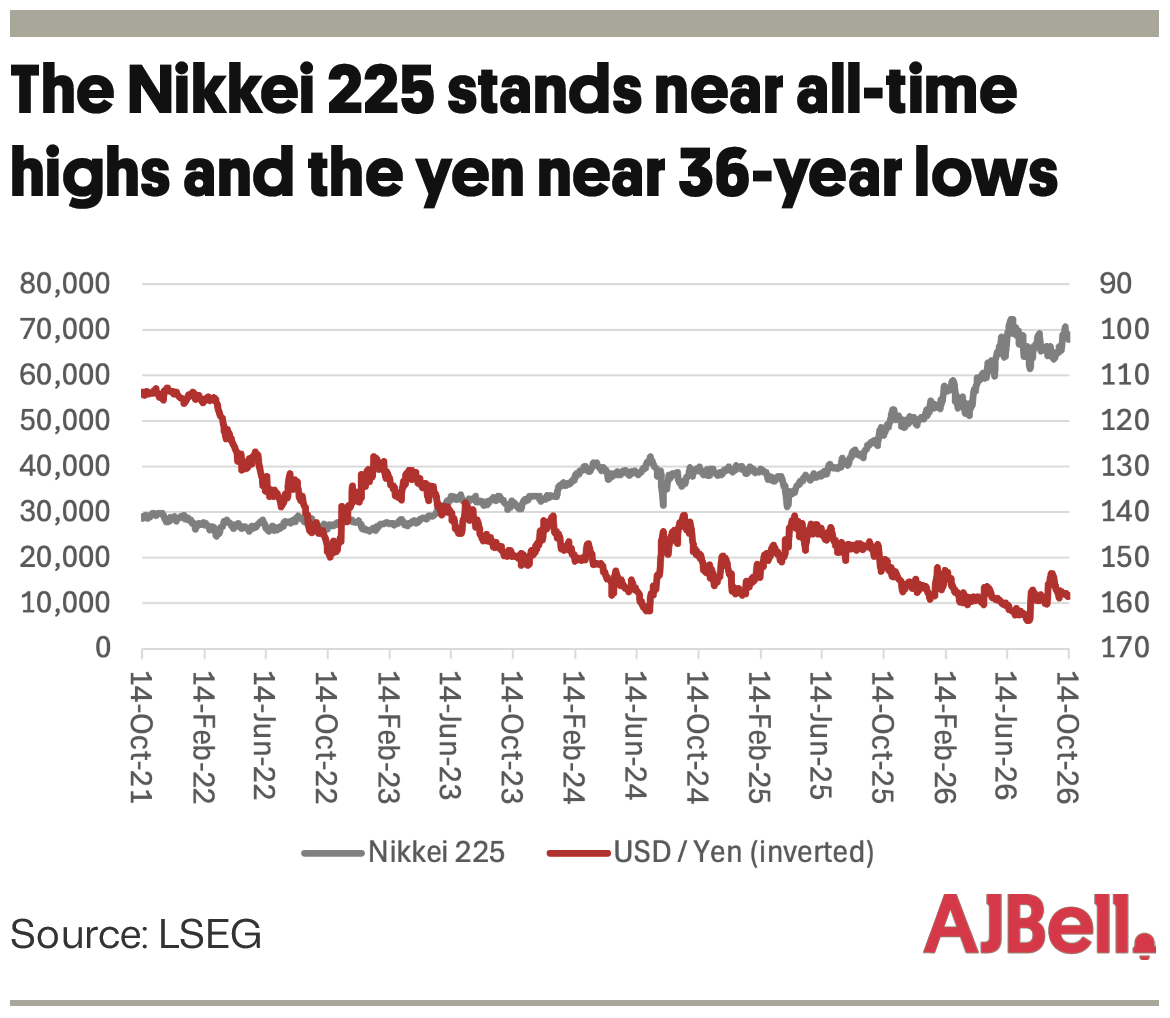
There is one fundamental difference, however, and that is how yields on Japanese government bonds (JGBs) are surging to levels not seen in 30 years, based on the ten-year paper, rather than staying at rock-bottom levels as they did during ‘Abenomics.’
If this trend continues, it could have wider implications for investors’ portfolios, whether they have exposure to Japan or not.
Why are Japanese yields moving higher?
Firstly, inflation is close to the Bank of Japan’s 2% target and creeping higher, driven largely by the rising cost of imported energy, particularly oil and gas.
Secondly, the Bank of Japan (BoJ), under governor Kazuo Ueda is raising interest rates at a snail’s pace, despite the inflationary threat.
Lastly, the BoJ’s dawdling means the yen remains very weak, as the interest rate differential between Japan and other leading nations remains vast. A weaker yen also aggravates inflation owing to the increased cost of imports, again notably energy, even if it helps exports.
One person who is definitely paying attention is US treasury secretary Scott Bessent. He has already tried to intervene and support the yen over the summer, with mixed results at best. The Japanese currency remains mired at around ¥160 to the dollar.
Why does the US want to intervene in currency markets?
It may seem odd that Bessent would wish to weaken the dollar against the Japanese currency, but the logic is irrefutable.
If the BoJ persists in moving slower than markets think is appropriate, the yen may weaken, stoking inflation and force further increases in JGB yields. This may have knock-on effects.
Firstly, Japan may intervene in currency markets. The easiest way to do this is to sell dollars and Tokyo’s hoard of US Treasuries would be a logical place to look for those.
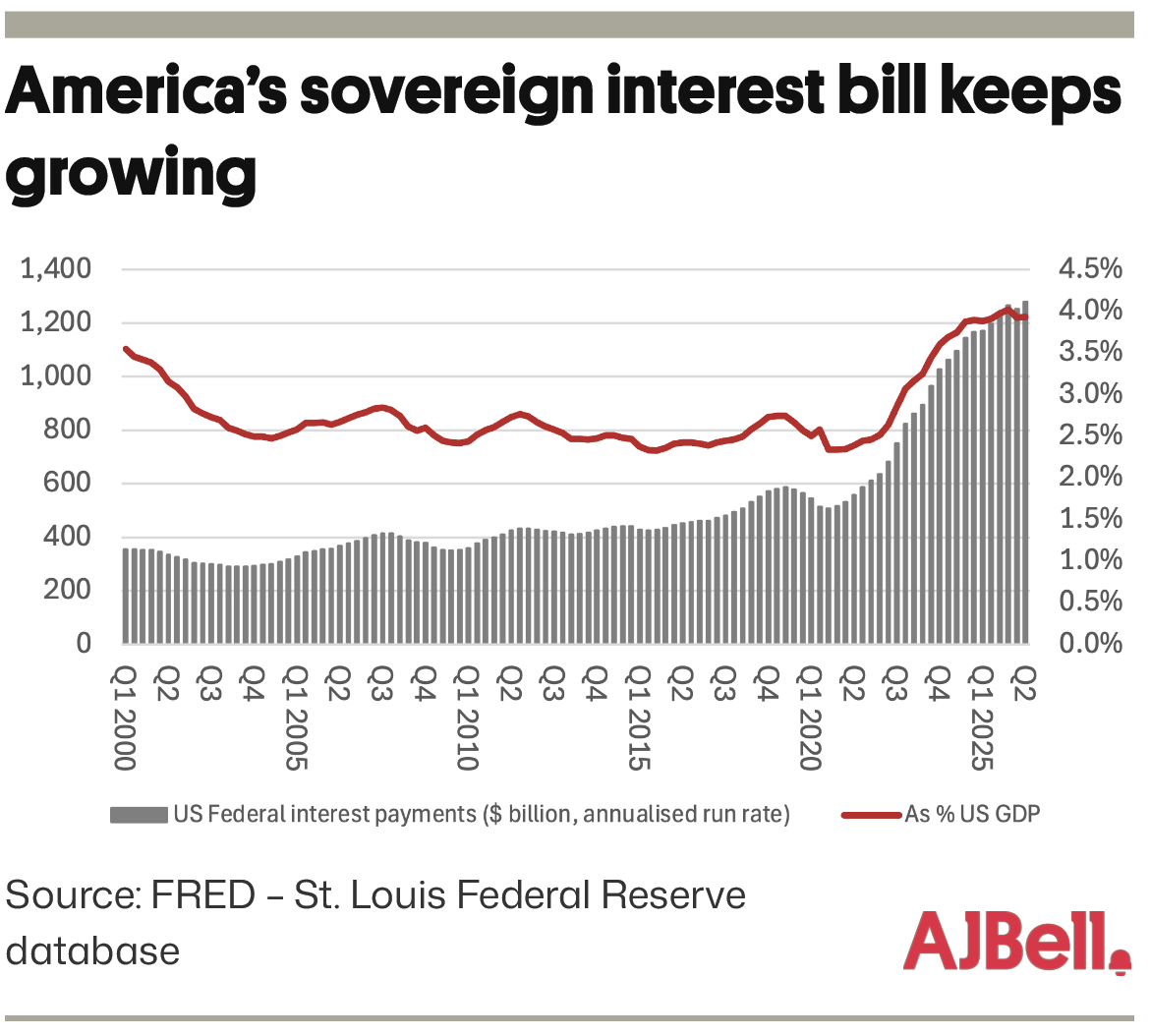
Japan is the single biggest individual holder of US government debt, so the last thing Mr Bessent needs is a seller in size, when 10-year US Treasury yields stand at 24-year highs and are squeezing America’s sovereign interest payments to record highs in nominal terms and around a fifth of the national tax take, at an annualised rate of some $1.3 trillion.
It is in the US’s interest, quite literally, to stop Japan from selling its holdings of Treasuries.
Secondly, rising JGB yields could persuade Japanese investors to repatriate the cash they have moved overseas in search of higher returns.
The giant Japanese asset manager Sumitomo Mitsui has already sold all its French government bonds, or OATs, and that may have contributed to the increase in yields there (along with budgetary chaos, soaring debt and public protests about any form of austerity of any kind).
Liquidation of holdings elsewhere in search of more tempting domestic returns could again force up US Treasury yields.
Equally, there is a danger in Bessent going in too hard, and he will be aware of this from his time as a hedge fund manager.
Flow of funds
The yen is a huge source of cheap financing for investment institutions the world over, because the interest rate is low and the currency keeps falling. Hedge funds borrow in yen and use that liquidity to invest elsewhere, arbitraging the higher returns.
If the yen suddenly surges, margin calls could force the hedgies to buy back their yen, and sell the positions funded with the borrowed Japanese currency so they can do so first.
It is a high-stakes game. The best case is the Bank of Japan acts more decisively than expected, to take the base rate to a little above the 2% that the markets see as the peak, and the yen stabilises or makes only modest gains as a result.
In a worst-case scenario, the Bank of Japan does too little and rising JGB yields drag fixed-income investors’ money to the East from the West, where government bond yields rise amid the sales by Japanese holders.
Corporate earnings can still grow, so share prices need not collapse, but investors may pay lower multiples for them, owing to the higher discount rates implied by higher bond yields and that could slow benchmark indices’ giddy ascent, if not stop it altogether.

Russ Mould: Investment Director
Russ Mould is AJ Bell's Investment Director. He has a Master's degree in Modern History from the University of Oxford and more than 30 years' experience of the capital markets.
He started out at Scottish...