


Archived article: Please note that tax, investment, pension and ISA rules can change and the information and any views contained in this article may now be inaccurate.
Related
news
12 November 2025
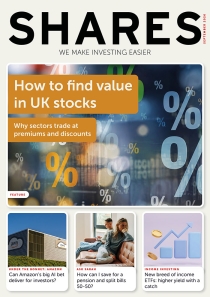
Welcome to the new-look Shares magazine – why you should read it and what to expect1 min readAuthor
Shares Magazine
When people talk about investing, shares usually steal the spotlight. But behind the scenes, there’s a much bigger player quietly shaping everything from mortgage rates to pension deficits to taxes. That’s the bond market. Worth around £150 trillion globally, bonds form the bedrock of the world’s financial system. So what exactly are they, and why do they matter so much?
How do bonds work?
At its simplest, a bond is a loan. When you buy a bond, you’re lending money to the issuer, usually a government or company, in exchange for regular interest payments (known as the coupon) and the promise that your original investment will be repaid at the end of a fixed period.
As an example, imagine the UK government issues a 10-year bond for £100 with a £5 annual coupon. You’ll receive £5 each year for 10 years, then get your £100 back at the end (assuming the government doesn’t default on its debt). Sounds straightforward, but there’s a twist: while the coupon is fixed, the price of the bond is not.
Bond prices move up and down in the market, and that movement affects the yield you can expect. When bond prices rise, yields fall; when prices fall, yields rise. This inverse relationship can seem weird at first, but it’s a core feature of how bonds behave.
In the above example, suppose the bond’s price falls to £90. The regular coupon is still £5 a year, so someone buying in at this level receives an annual income yield of 5.56% (£5 divided by £90). In addition, if held until maturity, the investor can expect to receive £100, also therefore bagging a £10 capital gain.
Why do bond prices change?
There are several reasons bond prices fluctuate. The most important is interest rates, or more exactly, interest rate expectations. When central banks like the Bank of England raise rates, that makes the coupons on existing bonds less attractive. Their prices fall accordingly. Conversely, when rates drop, existing bond coupons become more appealing, investors buy in, and prices rise.
Other factors also come into play too. Inflation is the nemesis of conventional bonds, which pay a fixed income, so unexpected inflationary periods can cause bonds to sell off. Investors also assess the ability of bond issuers to pay back their debt, be they governments or companies. A rise in the perceived risk of default can lead to bond yields rising.
Bond supply also matters. If a government is borrowing lots of money, and issuing lots of bonds, that increases supply and will push down prices, other things being equal. The appeal of other assets is another factor. In times of market stress, investors often flock to government bonds in what’s known as a flight to safety, pushing prices up and yields down.
The main types of bonds
The bond market is both vast and varied. At the heart of it lie government bonds, which are issued by national governments to fund spending that isn’t covered by taxes and other income. In the UK these bonds are known as gilts. The UK government has never formally defaulted on its debt, so gilts are considered very low risk. Other governments also issue bonds, from the ultra-safe US treasuries to riskier emerging market debt from developing nations. The latter typically offers higher yields to compensate for the greater chance of default.
Companies issue bonds too, allowing them to borrow directly from investors rather than just banks. These are divided into two broad groups. Investment-grade bonds are issued by financially solid companies with strong credit ratings, a score which reflects an evaluation of a company’s ability to pay back its debt by agencies like S&P and Moody’s. These bonds offer lower yields but come with less risk than the second category, high-yield bonds, which are issued by firms with weaker credit ratings. As the name suggests, higher yields have to be offered by these companies to compensate investors for the higher risk involved.
There are other types of bonds like inflation-linked bonds, supranational bonds and asset-backed bonds which are huge markets, but which are more specialist or complex.
Why do bonds matter so much?
Bonds underpin almost everything in finance. Government borrowing costs directly affect taxes, spending, and economic policy. Corporate bonds influence how businesses fund themselves. Pension funds, insurers, and banks rely on bond markets to generate stable returns.
The mini-Budget turmoil in 2022 showed just how powerful bonds can be. When gilt yields spiked, borrowing costs surged, mortgage rates jumped, and pension funds were forced to sell assets to cover losses. Our chancellor and prime minister were forced out of office. What happens in the bond market rarely stays in the bond market.
Why invest in bonds?
For UK retail investors, bonds can play several roles; generating income, providing diversification from an equity portfolio, and serving as a potential safe haven in turbulent times. But they’re not risk-free. Prices fluctuate with interest rates, inflation, and the financial health of borrowers. That said, if you hold to maturity, you get your promised interest and capital back, as long as the issuer doesn’t default.
Bonds may seem dull compared to the drama of the stock market, but they’re a vital part of the financial system, and now yields have risen way above the near zero interest rates we saw in the 2010s; they may be worth more than just a casual look.
Listen for more on bonds
You can access a free AJ Bell Money & Markets Deep Dive podcast in the usual places which delves into the world of bonds in more detail.

Hannah Williford: Investment Writer
Hannah joined AJ Bell in 2025 as an investment writer. She was previously a journalist at Portfolio Adviser Magazine, reporting on multi-asset, fixed income and equity funds, as well as macroeconomic impacts and regulatory changes...